Merge Fables
- 4.6
- Rating
- 1.00M
- Installs
- Free
- Price

 Analysis by App-foxy
I found Merge Fables most enjoyable when I treated it as a calm, gradually expanding puzzle game rather than a quick challenge. Its central idea is easy to understand: combine matching objects, turn the results into more useful items, and use that progress to shape a personal fantasy world. That simplicity is the reason it is approachable, but it is also the source of its main limitation. The game is designed for repeated, patient sessions, not for players looking for deep strategy or constant surprises.
After spending time with it, my view is fairly clear: this is a good choice for people who like tidy visual progress, collection, and gentle decision-making. It works especially well when I want something to play in short bursts without learning complicated controls. However, I would not recommend it as the first choice for someone who needs a demanding puzzle experience, a strong story, or a completely pressure-free free-to-play game.
How the merging loop feels in everyday play
The basic rhythm is immediately readable. I look for compatible items, combine them, and use the upgraded result to continue developing the surrounding world. That creates a satisfying chain of small improvements. Even when a session is brief, I usually feel that I have completed something: an object has evolved, a space has become more useful, or a new step in the wider building process is within reach.
You May Also Like

 Blood Strike: 2.5 Anniversary
Blood Strike’s Loadouts Turn Every Drop Into a Tactical Gamble
A close look at Blood Strike’s custom loadouts: how fast access to signature weapons reshapes its battle royale rhythm, rewards preparation, and narrows the gap between fights.

 Pandora - Music & Podcasts
Pandora’s Music Is Easy to Start, but Harder to Recover
Pandora’s strength is its low-effort path from a seed to a station. Its weak spot is how much confidence it asks you to place in connection, setup, and quiet recovery.

 8 Ball Pool
 Is Built on Rivalries, Rematches, and Routine
A close look at the rivalries, rematches, shared routines, and unanswered safety questions that turn a quick pool match into a persistent mobile community.

 Samsung Music
’s Quiet Strength Is Playing What You Already Own
Its reach comes less from spectacle than from dependable access to a personal library. That simplicity is both the app’s strongest retention engine and its ceiling.

 AccuWeather: Weather Radar
AccuWeather Review: A Quick, Clear Forecast for Everyday Decisions
For everyday plans, the best forecast is the one you can understand quickly. AccuWeather makes rain timing, radar, and local conditions easy to act on, with a few trade-offs.

 Hill Climb Racing
Why Hill Climb Racing Still Turns Crashes Into One More Run
A tiny car, a bumpy hill and one more upgrade: Hill Climb Racing keeps resurfacing because its simple chaos makes every near-miss feel personal.
More From Our News Desk



What makes the loop work is the balance between visible progress and modest planning. I am not simply tapping everything as quickly as possible. I have to decide whether to merge items immediately or leave them on the board until I can make a larger combination. That choice becomes more important as the play area fills. Combining too soon can be convenient, but saving pieces can produce a more efficient result later.
One of my most useful habits was to pause before making a merge whenever several related objects were visible. I first checked whether a larger combination was close, then considered how much open space remained. This small routine prevented the board from becoming cluttered and made the game feel more thoughtful. It is a simple tip, but it changes the experience from random tapping into light resource management.
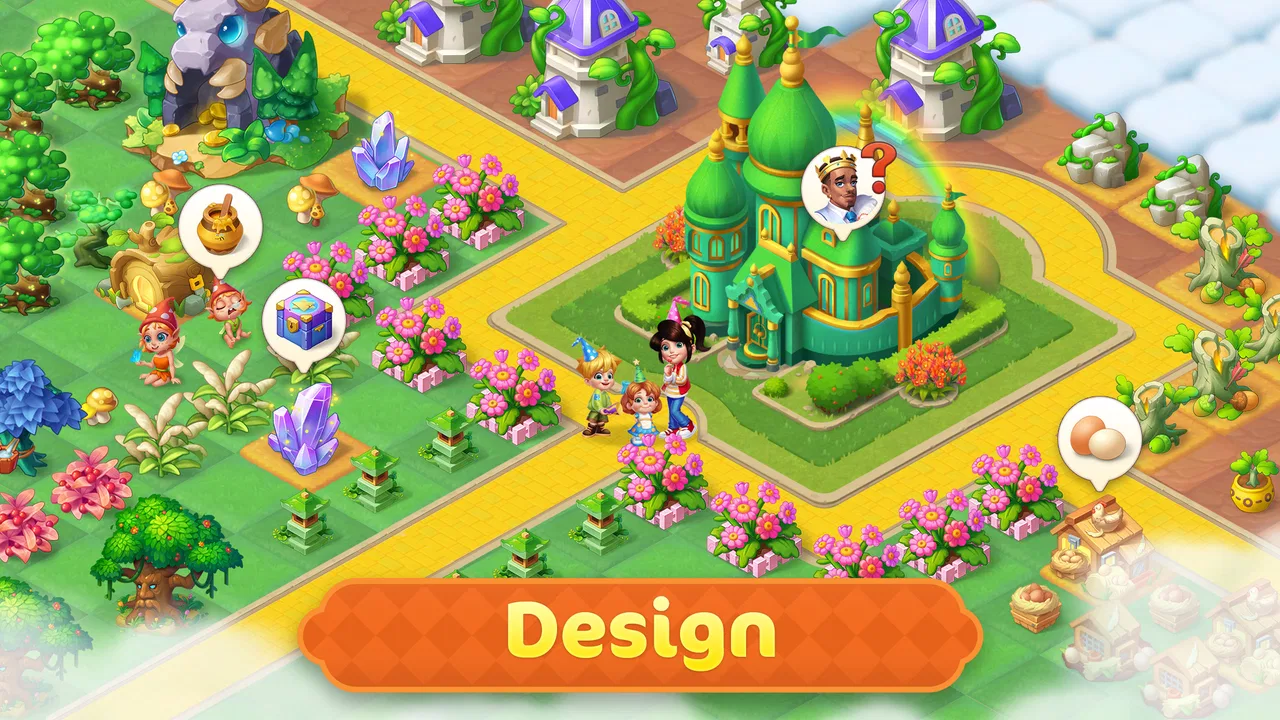
The world-building layer gives the merging activity a purpose beyond producing the next item. I like having a visual reason to continue, because the results are not confined to an abstract score. The setting gradually feels more personal as I work through it. That sense of ownership is one of the game’s strongest qualities, particularly for players who enjoy arranging, collecting, and watching a space develop over time.
At the same time, the game does not feel like a traditional logic puzzle in the strict sense. There is not the same pressure to find one perfect solution that I would expect from a compact brain teaser. The challenge comes more from managing space, timing combinations, and choosing what to prioritize. Players who enjoy optimization may find enough to think about, while players seeking difficult deduction may find the decisions too gentle.
The controls are suited to touchscreens. The actions are direct, and the concept does not require a long tutorial to understand. That makes it a practical game for a quick break, a commute, or a quiet evening. I can open it, make a few decisions, and stop without needing to remember a complicated control scheme when I return.
Why the progression is more appealing than the premise suggests
On paper, merging matching items sounds repetitive. In practice, the gradual reveal of better results gives each small action a reason. I often began with the intention of making only a couple of combinations and then stayed longer because I was close to completing another step. This is not a game built around dramatic individual moments; its appeal comes from the accumulation of many modest ones.
The strongest evidence of that appeal is the game’s broad reach. It is a free puzzle title from Microfun Limited with an average rating of 4.6 from around 105 thousand ratings, and it has passed one million installs. Those figures do not prove that every player will enjoy it, but they fit my experience of a game that is easy to enter and satisfying for a wide audience.
I also appreciate that the age rating is Everyone. The presentation is accessible, and the basic concept is simple enough for casual players who do not normally choose puzzle games. That does not mean every part of the experience will suit every age or attention span, but the core interaction is much less intimidating than a strategy game with dense menus and layered rules.
A realistic everyday use case is a short waiting period when I do not want to commit to a full game. I can open the board, look for a few useful combinations, and leave after making visible progress. The game is also suitable for a relaxed evening when I want an activity that occupies my hands without demanding constant concentration. Its gradual pace makes it easier to fit around ordinary routines than a match-based game that expects a complete round.
Another useful approach is to treat the board as a workspace rather than a collection of isolated objects. I tried keeping related items near one another and leaving a small amount of room for future combinations. This made later decisions easier and reduced the frustration of having useful pieces scattered across the area. The game rewards that kind of informal organization, even though the rule itself is simple.
The trade-off between comfort and challenge
Compared with classic match-three games, Merge Fables feels less focused on rapid pattern recognition. A match-three title usually gives me a compact board, a clear move limit, and an immediate result. Here, the satisfaction is slower and more cumulative. I spend more time building toward an outcome than reacting to a short sequence of moves.
Compared with a traditional idle game, it gives me more direct control. I am not only waiting for resources to accumulate in the background; I am actively deciding what to combine and when. Still, it shares the idle genre’s long-term feeling of gradual growth. That makes it a useful middle ground for people who want some interaction without the intensity of a fully competitive puzzle game.
It is also different from a pure decorating game. The visual development is important, but it is connected to the merging process rather than being the entire experience. Someone who mainly wants unrestricted furniture placement or detailed design tools may prefer a dedicated decorating title. I would choose this game when I want decorating progress to be earned through small puzzle decisions.
The game’s free entry is helpful because I can test the loop without paying first. There are in-app purchases ranging from $0.99 to $99.99 per item, so the free-to-play structure deserves attention. I would advise setting a personal spending limit before becoming invested in long-term progress. The large difference between the smallest and largest purchase options is a reminder that convenience spending can become significant if I stop paying attention.
This is not necessarily a reason to avoid the game, but it affects how I would approach it. I prefer to play at the pace the board naturally allows and regard optional spending as a convenience rather than a requirement. Players who dislike any game economy that presents paid choices may be happier with a premium puzzle title that has a single upfront cost.
Where the experience can become frustrating
The biggest weakness is repetition. The first stages benefit from discovery because I am learning how combinations lead to new results. After that, the same basic action remains the foundation of play. If I am in the mood for fresh mechanics every few minutes, the routine can start to feel predictable.
Board space is another meaningful consideration. Efficient organization helps, but a growing collection of objects can still make the screen feel busy. When I had several possible combinations competing for attention, the relaxing quality became less consistent. The game asks me to make careful choices while also presenting a long-term accumulation of things to manage.
That tension is not entirely negative. It gives the puzzle layer some purpose, and it rewards players who plan ahead. However, it can be irritating when I want a very casual experience and instead find myself rearranging objects simply to create room. People who enjoy sorting and optimization may see this as part of the fun; people who want instant, uncomplicated play may see it as friction.
The gradual pace can also test patience. Progress is designed to build over time, so this is not the right game if I need a fast sense of completion in every session. I sometimes enjoyed that slower rhythm, especially when using the game to unwind. On other occasions, I wanted a more immediate payoff and found the repeated preparation less rewarding.
Another limitation is that the merging idea carries most of the experience. The world gives the process context, but the central interaction remains the same. If a player’s enjoyment depends mainly on narrative twists, complex characters, or a wide range of puzzle formats, this game may feel too narrow. I would choose a story-driven adventure or a more mechanically varied puzzle game in that situation.
Who should try it, and who should skip it
I think Merge Fables is particularly well suited to casual puzzle players who enjoy collecting and visible development. It is also a good fit for someone who likes games that can be checked briefly throughout the day. The simple touch interaction makes it approachable, while the need to plan combinations gives it more substance than a purely passive progress game.
It may appeal to players who enjoy organizing virtual spaces. Keeping similar pieces together, protecting open areas, and waiting for a more valuable combination create a gentle form of planning. This is not advanced strategy, but it is enough to make the board feel like something I am managing rather than merely clearing.
I would also recommend it to people who prefer low-pressure entertainment. There is no need to master complicated controls, and the game’s main idea can be understood quickly. It can sit comfortably alongside other daily activities, provided the player is comfortable with a slower progression model and the presence of optional purchases.
I would suggest skipping it if you want a demanding puzzle with strict time limits or a single correct solution. I would also look elsewhere if you dislike repeated merging, crowded boards, or free-to-play purchase prompts. A premium logic game is likely to be a better fit for someone who wants a focused challenge without a long-term collection loop.
Players with older devices should note that the minimum operating system is Android 6.0. The current version is 5.2.0, which is useful to check before installing. On a compatible device, the game’s straightforward interaction makes it a reasonable choice for casual play, but the software requirement still matters for anyone using an older phone or tablet.
My final recommendation
My overall impression is positive, with an important qualification: Merge Fables succeeds because it keeps a familiar idea comfortable and rewarding, not because it reinvents puzzle games. The combination of merging, collection, and world development gives ordinary short sessions a clear sense of direction. I enjoyed the feeling of turning a messy group of small items into something more useful and seeing that effort contribute to a larger setting.
The best way to play is deliberately. I would avoid merging automatically, keep related objects close together, protect some open space, and decide in advance how much optional spending fits my budget. Those habits make the board easier to read and help preserve the relaxing side of the experience.
As a free game in the puzzle category, it is easy to try, and its Everyone rating makes the core concept broadly accessible. The large player response, including an average of 4.6, supports the impression that its straightforward loop has found an audience. Still, popularity should not obscure the trade-off: the same repetition that makes the game calming can make it feel limited.
My recommendation is simple: choose it if you want a gentle merge-and-build game for short, repeatable sessions, especially when you enjoy organizing a growing virtual world. Skip it if you need intense logic, varied mechanics, or a purchase-free experience. For the right player, its steady rhythm is genuinely relaxing; for the wrong one, it will feel like doing the same small task for too long.
FAQs for Merge Fables
01What is Merge Fables about?
Merge Fables is a casual merge-and-building game in which you combine matching items to create upgraded objects, complete tasks, and gradually develop a colorful fantasy world. As you progress, you unlock new areas, characters, and story elements. The gameplay is designed for short sessions, although completing larger objectives may encourage longer playtime.
02Is Merge Fables free to download and play?
Yes, Merge Fables can generally be downloaded and played for free on supported Android and iOS devices. However, the game may include optional in-app purchases for items such as energy, coins, boosters, or special bundles. You can usually progress without paying, but purchases may reduce waiting times and make certain upgrades or events easier to complete.
03Does Merge Fables require an internet connection?
An internet connection may be needed for the best experience, particularly when loading advertisements, synchronizing progress, accessing limited-time events, or processing in-app purchases. Some basic gameplay may work temporarily offline, but availability can vary by device and game version. Connecting regularly is recommended to avoid synchronization problems or missing event content.
04Is Merge Fables suitable for children?
Merge Fables uses simple controls and colorful visuals that can appeal to younger players, but parents should still review the game before allowing children to play. The app may contain advertisements, optional purchases, and social or promotional features. Parental controls and purchase restrictions are recommended, especially on shared devices, because progress-based games can encourage frequent play.
05How can I recover my Merge Fables progress?
Progress recovery normally depends on whether the game supports an account, cloud saving, or connection to a platform such as Google Play Games or Game Center. Before changing devices or reinstalling, link the game to an available account and confirm that synchronization is active. If progress disappears, contact the developer through the in-game support option and provide your player details.
Pros
- Relaxing merge gameplay that is easy to learn and play at your own pace.
- A charming fantasy world with colorful characters and detailed environments.
- Regular quests and events provide extra goals beyond the main progression.
- Playable in short sessions
- making it convenient for mobile gaming.
- Unlockable areas and characters give a satisfying sense of long-term progress.
Cons
- Energy limits can interrupt longer play sessions.
- Some upgrades and resources require considerable waiting time.
- Frequent offers and in-app purchases may feel distracting.
- Progress can become repetitive after extended play.
- An internet connection may be required for some features and events.

Merge Fables
Gallery